The Sixth Taste
You've never heard its name. But you've felt it your whole life — and it might be why you can never stop at just one.

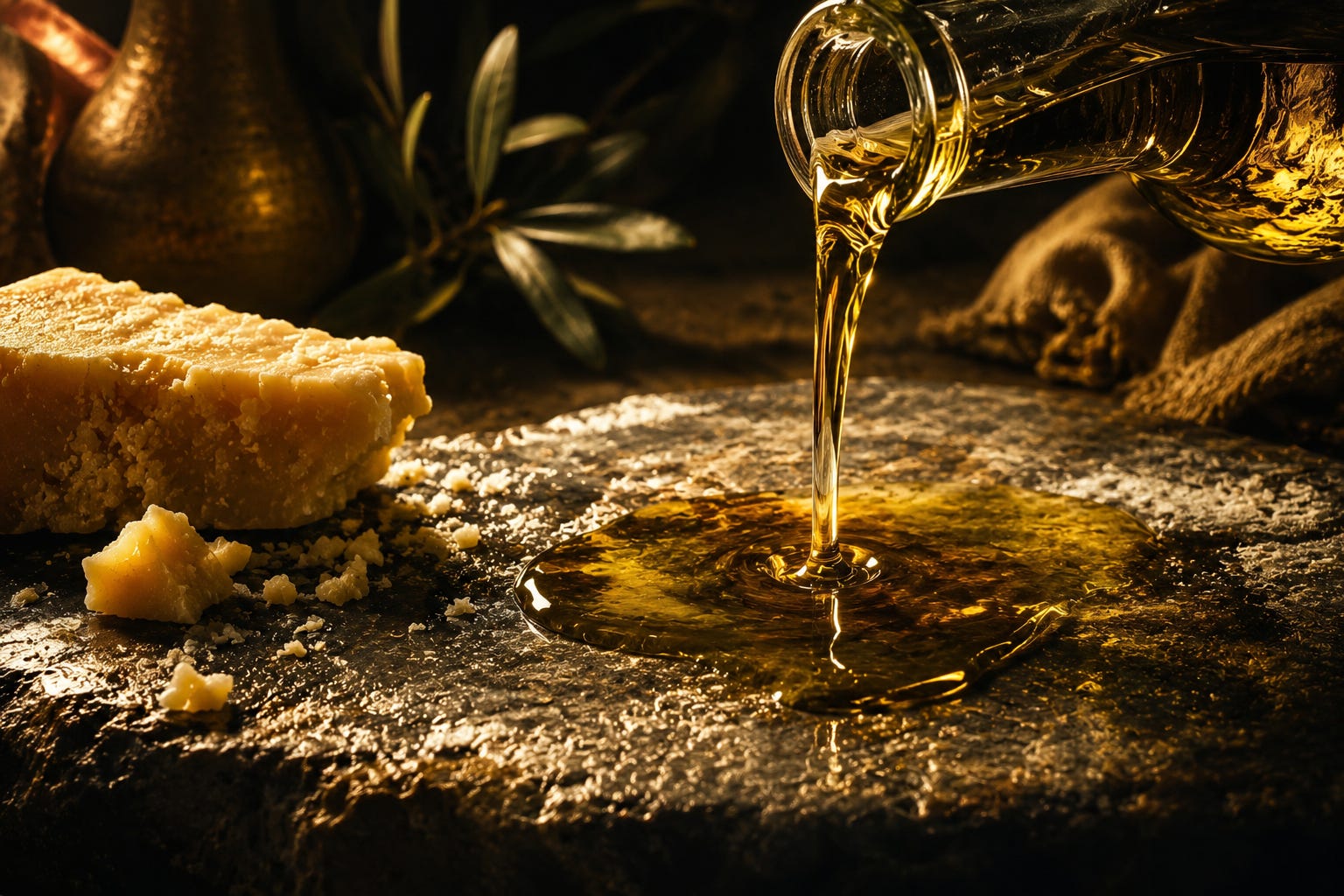
There’s a reason you finish the fries before the burger. A reason “just one more chip” has never actually been one more chip. A reason the fattiest foods are almost always the ones you can’t put down.
Science has a name for this now. It was identified in 2015, given a Latin name nobody uses in conversation, and it may be the sixth basic taste — one your tongue has been quietly detecting your entire life without anyone explaining why.
Not long ago, scientists suggested a sixth basic taste: fat. They even gave it a name - oleogustus, Latin for “taste of fat.” I imagine tasting pure fat: it’s not the creamy, delicious sensation of a well-marbled steak (that’s mostly aroma and texture), but rather a sort of acrid, unpleasant pungency when fatty acids hit the tongue in high concentration. In fact, oleogustus was identified by having people taste emulsified fatty acids; they reported a unique taste - not sweet, not sour, distinctly fatty and not very pleasant.
It seems that when fat is fresh and integrated in foods, we don’t taste it directly (we enjoy its texture and aroma); but when fat breaks down and goes rancid, the fatty acids might activate this sixth sense as a warning, much like bitterness. The thought that our tongues may have been quietly sensing fat all along - or at least its dangerous extremes - is intriguing. Perhaps oleogustus will someday join the canonical list of tastes.
Here’s the paradox at the center of oleogustus: in isolation, the taste of fat is not pleasant.
When researchers at Purdue University identified it in 2015, they did it by having participants taste emulsified fatty acids — the chemical components of fat, stripped of everything else. Texture, aroma, context: all removed. What remained was described as unpleasant. Acrid. Rancid. Not something you’d reach for again.
But you reach for french fries.
The reason may be that oleogustus operates differently depending on concentration and context. When fat is fresh and embedded in food alongside other flavors, the signal doesn’t register as a warning — it registers as a pull. The body reads it as energy, as nourishment, as keep going. Only when fat is isolated, concentrated, or spoiled does the alarm activate — the same evolutionary logic as bitterness, the mouth saying slow down, something is wrong here.
A protein called CD36, found on the surface of taste cells, is believed to bind with fatty acids and carry the signal. Like the umami receptor before it — dismissed by the Western scientific world for nearly a century — it was always there. Already running. We just hadn’t looked for it yet.
What’s worth sitting with is this: the sixth taste may explain the cravings that have always felt slightly beyond reason. The reason certain foods call you back even when you’re full. The reason you tell yourself one more and mean it and it isn’t true.
Your tongue was telling you something all along. We just didn’t know how to read it.
Next time: the truth about flavor — which is that most of what you think you’re tasting isn’t coming from your tongue at all. Post 13: The Fiction of Flavor.
TwoSuitDonny is a journey through God’s creation - the light, the senses, and the wonders He built into the fabric of how we experience the world. Subscribe to follow the rest of the journey through the spectrum.